Moab and The Delicate Arch

2.09.2023

Last summer, we had an amazing 10-day trip to see the Mighty Five National Parks in Utah. Since the parks are spread out quite a bit, we ended up staying at four different places, but the drive, the scenery, and the adventure itself made "living out of our car for the week" so worth it; we had a chance feel like real-life nomads--except, with excellent accommodations.

At 7 a.m. on June 15th, our plane departed Bradley International Airport; after a layover in Denver, our final destination would be the small, homey St. George Regional Airport. When I first purchased the tickets, we were supposed to arrive in St. George at 1 p.m., but three-time changes later, the arrival was moved to 4 p.m. It meant more time waiting for our layover in the airport, but even more, it meant we would be traveling through the evening and into the night to reach our first hotel in Moab, Utah.

When we arrived at the St. George Airport, we conveniently picked up our Hertz rental car, which was just steps away from the baggage claim. (I don't even remember there being a line.)  The gentleman at the desk gave us our key and said the car was right outside the door. It was the most convenient airport ever!  

Then, we programmed Moab Springs Ranch resort into the GPS and off we went! It would be a five-hour car trip (the longest of our trips) to cut clear across the state of Utah from West to East. The idea is that we would begin our Mighty Five adventure in Moab and then drive our way right back down to St. George again--covering all five of the National Parks in the process.

I downed a Five-Hour Energy drink (terrible, I know), and then took the wheel. We only stopped to get off the highway once--to have a yummy Mexican meal and use the bathroom. The rest of the time, we drove, letting our hotel know we would be arriving late (probably around 10:30 or 11 p.m.) to pick up our room key.

As I drove on Utah's I-15 N and I-70 E, I noticed three stark differences between the highways here in Utah and back home. First, on these highways, I could drive 80 MPH, and as it turns out, people do drive this fast. Often, I'd catch myself going a leisurely 65 MPH while irritated cars and trucks whipped by me in the left lane. Several times, my back-seat-driver son would tell me, "Mom, catch up!"  

"I know," I'd mumble, exasperated. It took energy to go 80 MPH--not just gas energy but human energy. I was already exhausted from our nine-hour plane adventure.

The second difference was the vast expansion of the highways. You see, cars and trucks only passed me out when they were around. For most of the trip, we felt alone on the highway--just us and the winding roads, desert, and mountains. I could understand why we were allowed to drive so fast--the roads were long, wide, and empty.  

The third and final jaw-dropping difference was the mountains. Yes, we did have to drive snake-like as the highway cut through them, particularly when we were getting closer to Moab, but the mountains turned into these ginormous medieval castles right before my eyes. I had to wake up my sleeping passengers to ensure I wasn't hallucinating. At this point, the sun had set in the horizon, so the "castles" took on a shadowy, dark mystery against the navy blue sky. They were impressive!

When we arrived at Moab Springs Ranch, an envelope with directions to our bungalow was waiting for us. I attempted to find the bungalow using the directions on my own but quickly discovered I needed everyone's help. It was hard finding the right road in the dark, and we seemed to be either driving in circles or backing out of dead ends. Only God knows how we eventually found it.

                                                                  *          *          *         

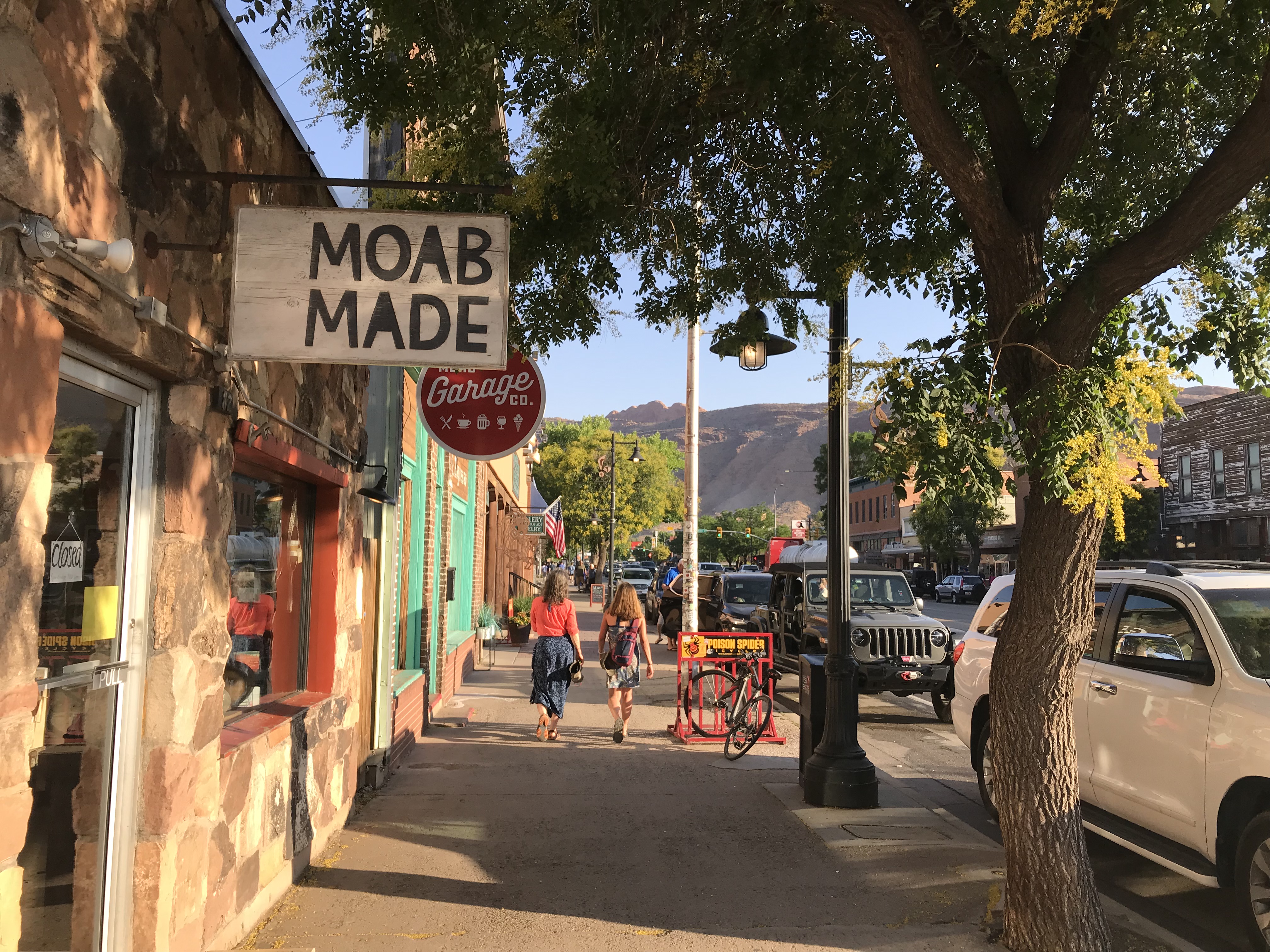
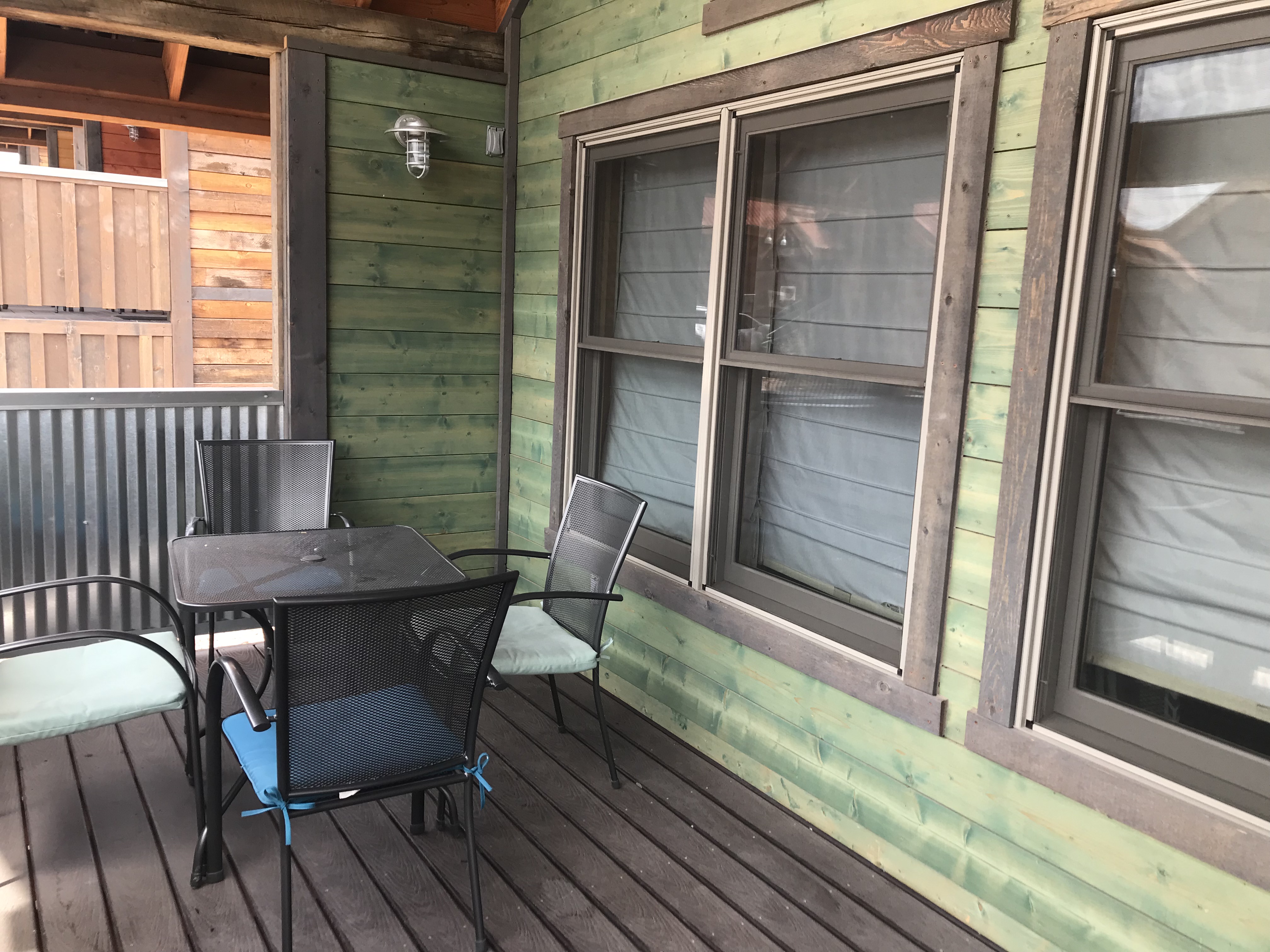
We rested in the morning, ordering a yummy eat-in breakfast and then going for a dip in the resort's pool. In Moab, two of the Mighty Five National Parks are minutes away (Canyonlands is about 30 minutes, and Arches is less than five.)  The goal was to see Canyonlands on Day 1 in Utah, but the bus tours were sold out, and we were still pretty tired. Instead, we toured downtown Moab (which had an artsy, cool, hippy vibe), and big and Little Lew took an ATV tour, which brought them in the direction of Canyonlands. (I was fine passing over that ATV tour as we would be going on another one outside of Zion National Park at the end of our vacation.)  While the boys played in the sand, I went souvenir shopping--buying shirts and stickers of Delicate Arch before even seeing it in real life!









On our second and last full day in Moab, we woke up super early to drive to Arches. Since I couldn't get "timed entry tickets" into the park, our only choice was to enter before the National Park Rangers took their posts. (Arches does not "lock up" at night, so we could drive on through before the park officially opened at 7 a.m.)

My one and only goal was to see the Delicate Arch. I had read the actual hike to the arch (and not just the viewpoint) was a three-mile hike roundtrip, but it wasn't easy. For one, the hike is oppressive during the summer when the sun is up. Second," it contains a significant climb up a steep slickrock slope."  I read about this ahead of time, of course, but I have to say that this description didn't fully sink in until we attempted the actual hike. Starting around 6 a.m., we were able to beat the mid-morning and mid-afternoon sun, but the slope was STEEP and CONTINUOUS. We would climb until our legs felt weak, stop, take a few minute break, and then climb some more, then repeat, and repeat, and repeat. My husband, with his bad knee, had a tough time with this part, and I started immediately regretting the decision to do this type of strenuous hike right at the beginning of our vacation. He asked me a few times how much longer it would be, and in fact, all I could say was, "It has to be close. It's only supposed to be 1.5 miles away."





By the grace of God, we made it up the final part of the slickrock and then climbed upward some more to a narrow path that went higher and higher. (What? I thought in my head. Nobody said anything about this!)  The final part of getting to the arch meant we had to climb up this steep slope and spiral around a narrow mountain ledge. The view was gorgeous but scary, and the narrow ledge meant that it was very difficult to have two lanes of foot traffic--one for people getting there and one for people leaving. I held my breath and practically slithered against the rock wall, too scared to be near the edge, looking down. The higher we climbed, the more the wind kicked up, so now I felt like I was losing my center of gravity, too. What else could go wrong?


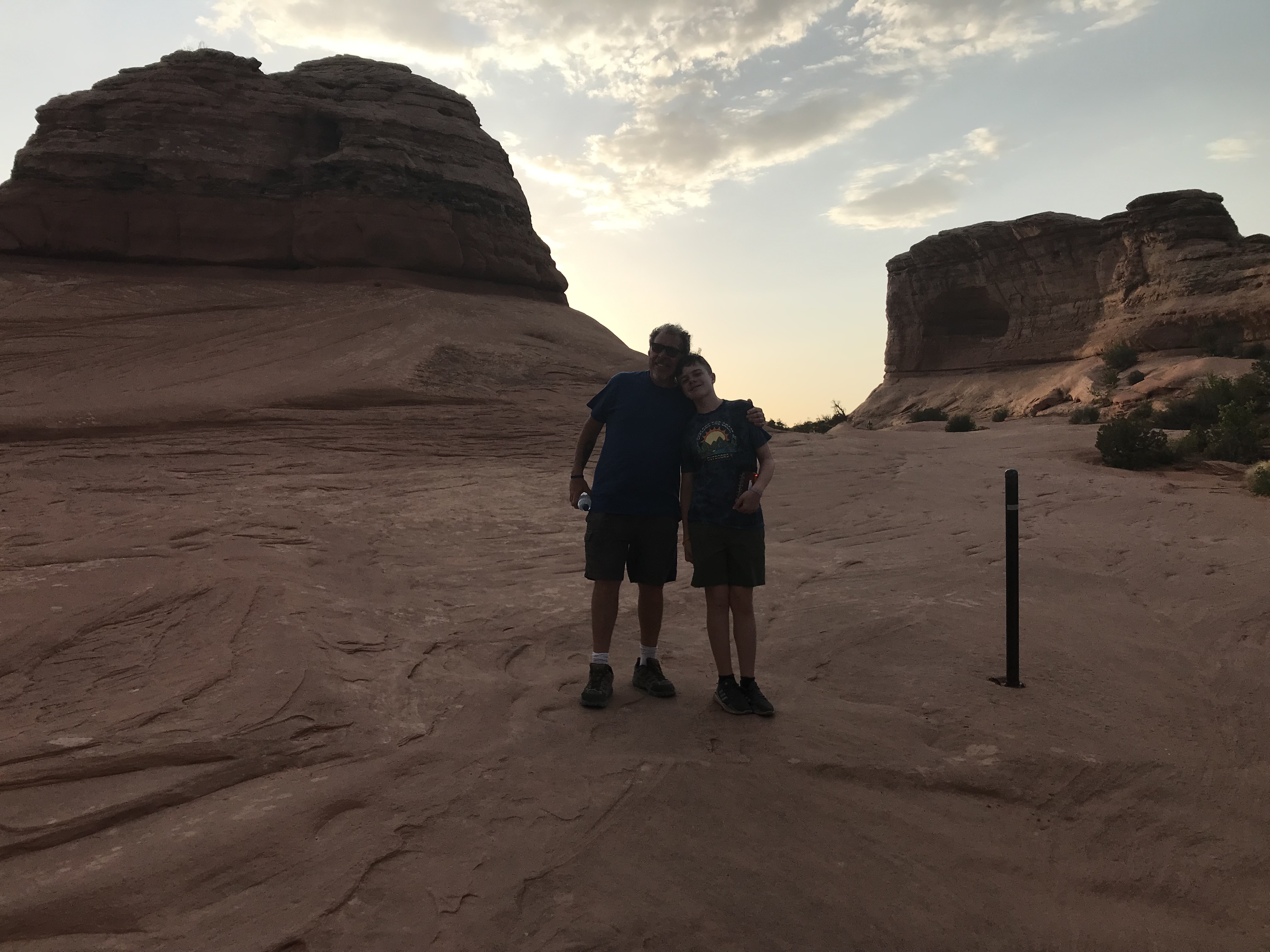


As we made it around the corner, there stood the awesome wonder before our eyes--the 46-foot high, 32-foot wide freestanding Delicate Arch--the symbol of Utah--the most recognized geological feature in the world! To touch the arch, all we needed to do was climb over a slight wall and walk out on a wide ledge--simple, right? I wanted to do it, but the wind kept on whipping, my knees started knocking, and my head started feeling light-headed and dizzy (half because of the wind and half because of my fear of heights). To my surprise, my dare-devil husband didn't walk out to it either. The three of us were perfectly content to get some photos with the arch in the distance, and those photos did not disappoint. It was one of the most beautiful and breathtaking landscapes I had ever set my eyes on!


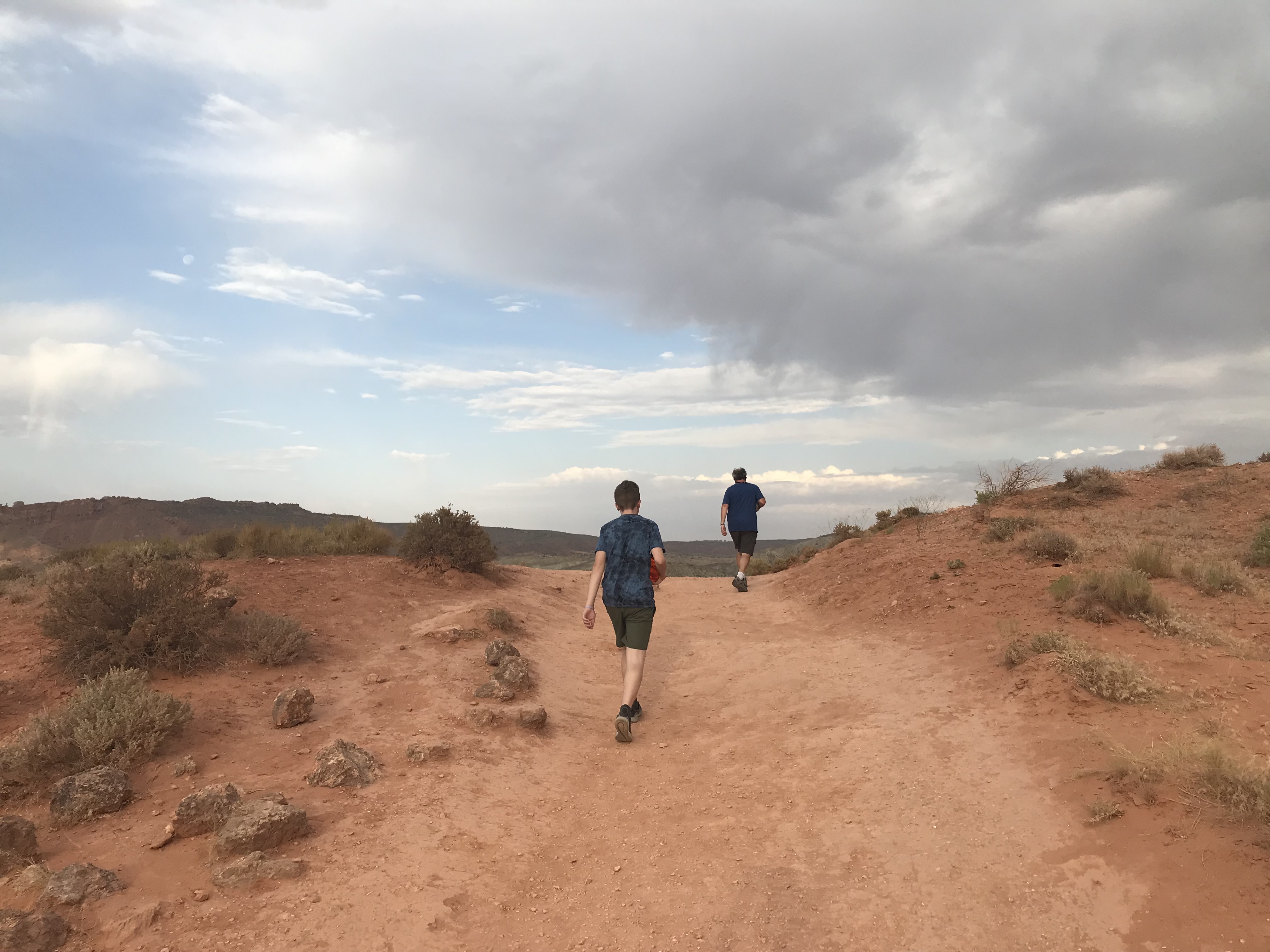

In some ways, the 1.5-mile walk back was easier, but the downhill climb was still tough on my husband's knees. When we arrived back to our car, we celebrated with hoots, hollers, and high-fives! "We made it back alive," we chanted, "without any injuries!"  During our hike, we saw plenty of people give up--young, old, parents with babies and young children. Still, we--our middle-aged, non-athletic selves with cracking bones and failing knees-- made it. It was an accomplishment for the ages, and it made us stoked for the rest of our trip!

A Newport, RI Holiday

1.27.2023

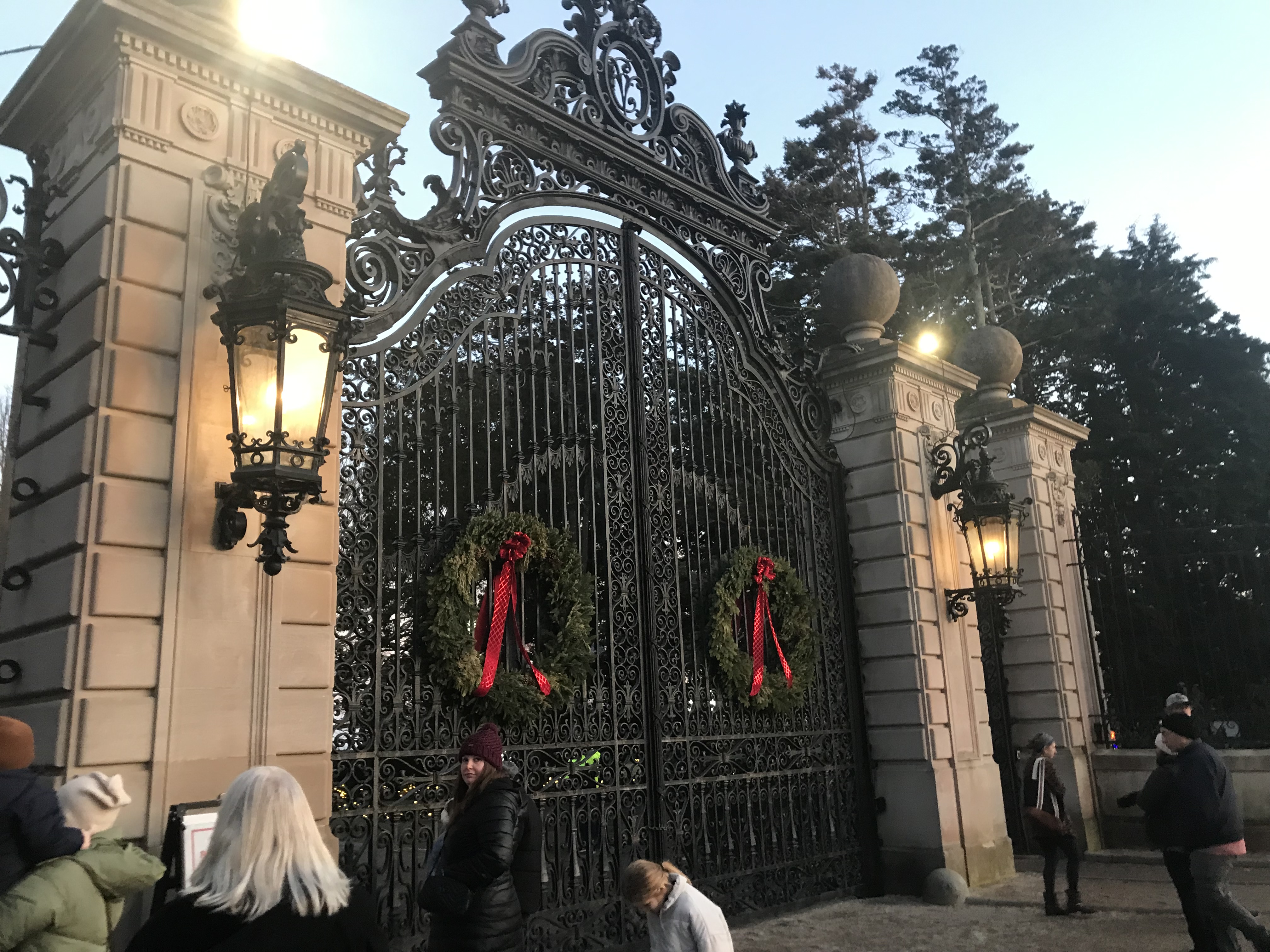
On December 30th and 31st, our little family and my sister-in-law's family headed to Newport, RI, to see the beautiful Newport Mansions decked out for the holidays.   It was a short trip with just a one-night stay, but on Friday, we had a chance to see the Sparkling Lights at the Breakers, and on Saturday, we had a chance to do the popular Servant Life Tour at the Elms.  

For some quick background information, the Newport Mansions were once considered "summer cottages" that were built by wealthy business tycoons during the Gilded Age. The Gilded Age, which encompasses the years between the end of the Civil War in 1865 to 1900, was considered a time of extravagance for just a few businessmen who amassed their wealth during the Second Industrial Revolution. While the late 1800s was considered a time of invention (electricity, the incandescent light bulb, the telegraph/radio, and petroleum refining, to name a few), it was also considered a time when "the wealthiest one percent of American families controlled 51 percent of the nation's real and personal property" (P. Kiger "How Robber Barons Flaunted their Wealth during the Gilded Age")    The richest of these families were known as robber barons, a title they were given because they used unethical business practices, exploited workers, and created monopolies, all to accrue fortunes (worth in the billions today). Another interesting fact during these times is that the government had no ability to break up monopolies or even tax them!

To understand the lifestyle of these robber barons is to understand the extravagance that existed in Newport during this period. For one, this elite class didn't just compete in business; they also competed in terms of homes, decor, material possessions, and even social events. Although the Newport Mansions were only used as summer homes, their owners built them for lavish summer entertaining, which meant they needed to be big and furnished with Europe's finest luxury items. Silk, marble, gold, mosaics, paintings, tapestries, and jewels were all the norm. The wives of the robber barons changed their clothing five to six times a day as they freshened up for each social engagement, and they flaunted jewels along with their beautiful gowns--some coming from faraway places like Paris and London. Food, drink, and dancing was the norm, along with all-night costume parties with massive guest lists. To learn more about the opulence of this time, I highly recommend reading P. Kiger's full article here.

Going to see the Sparkling Lights at the Breakers was a fun family experience. While the adults had visited the Breakers Mansion before (many years ago), it was a new experience for Little Lewie and his four cousins. We first toured the inside, getting to see all the magnificent rooms decorated for the holidays. Then we followed a spiraling maze of colored lights around the grounds, which led us to a snack place where we could purchase hot chocolate, s'mores kits, and other goodies. The kids loved being able to toast their marshmallows while overlooking the grandeur of the mansion and the "sparkling lights" in the backdrop.  


While touring the mansion, the opulence of the Gilded Age was right in front of us. Being the "grandest" of all the Newport Mansions, the Breakers has 70 rooms and a 45-foot high Great Hall that sits on 13 acres overlooking the Atlantic Ocean. Cornelius Vanderbilt II, President and Chairman of the New York Central Railroad, had the house erected in 1895 as a "summer home," which boasts Italian Renaissance architecture complete with marble statues, fountains, high ceilings, ornate murals/paintings, and grand balconies. Here are just a few more photos, mostly with us, of the estate:


This bathroom is larger than our living room at home!


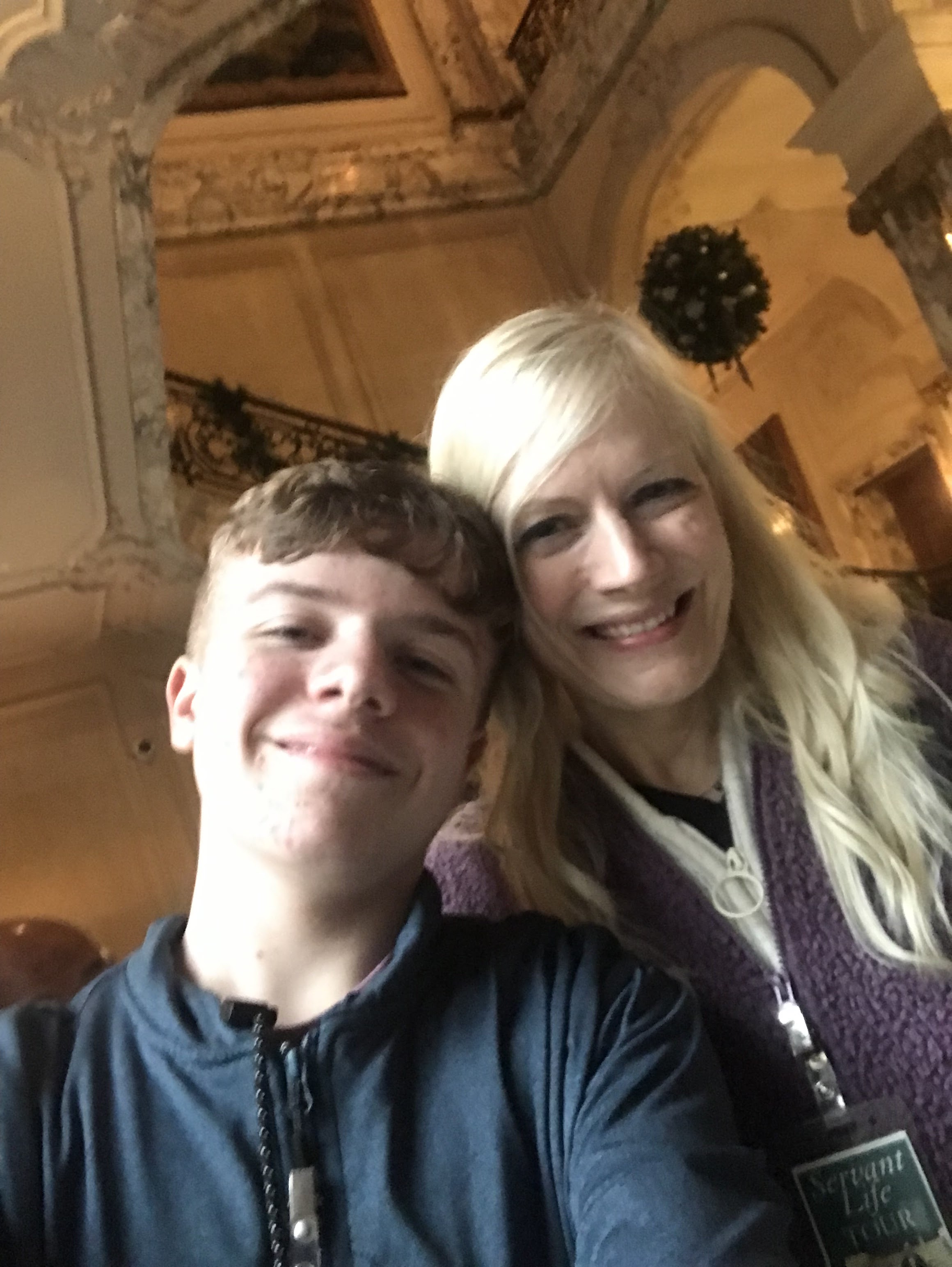
During our second and last day at Newport, we had lunch at the Red Parrot and then drove to the Elms for their popular Servant Life Tour. We thought the kiddos might enjoy seeing the secret living quarters of the servants, the passageways, and the coal cellar, while the adults might enjoy learning about how the servants worked behind the scenes in such a way that it seemed as if these mansions were run by magic.


The Elms, a French-style chateau, was another mansion erected to serve as a summer home--this time for the millionaire Edward Julius Berwind who founded the Berwind-White Coal Mining Company. Known as a coal baron, Berwind was "the world's largest individual owner of coal mining properties," and he worked with another business tycoon, J.P. Morgan, to expand his coal mining empire. Interestingly, he was "director of the International Mercantile Marine company, which owned the White Star Line and the RMS Titanic." He also controlled the steamship business in New York and Philadelphia, where he was the sole coal supplier to run the ships. (During the tour, we learned that Berwind had a passion for technology and engineering, which resulted in the Elms being one of the very first homes in America to be wired for electricity. He also had an electric icemaker!)

The Servant Life Tour focused on the "hidden" parts of this mansion, which included the servant quarters, the laundry rooms, the boiler rooms, the basement kitchens, and the coal cellar. As expected, the glitz and glamour were reserved for the main parts of the mansion, so the other parts, away from the public eye, were modest at best.   


For example, when looking at the Elms, it appears as if there are only two floors, but few people know the fancy part at the top (without the windows) is actually a third floor where the servants slept. They did have access to the rooftop for sunlight and fresh air, but they were very much hidden from view. Here is what the third floor looks like on the inside:


Surprisingly, the rooms were quite large, and Mr. Berwind tried to add some extra comforts for the servants in order to tempt them to stay employed with him. Still, when they signed up to work at the Elms, they were committing to working 16-hour days with only one day off per week. They also were not allowed to be married or have families. Many of his servants were immigrants from Ireland; however, he did hire some "professional servants," such as the butler and the cook, who received higher wages.

The tour provided a wealth of information, complete with original photos and documents of some of Mr. Berwind's staff. As expected, the life of the servants was hard; however, I never knew that the noble women of the house changed outfits about five times per day and that the sheets to all the beds in the house had to be laundered and ironed twice per day (even if they were not used). It felt like the servants often had to do work for work's sake, and I wondered if they ever grumbled among themselves as to why they had to put in all the extra effort for seemingly no reason at all.  

The tour ended with a visit to the basement. In the winter, the mansion was heated using coal, and they brought us to the coal cellar, which had a distinctive tunnel. (Evidently, Mr. Berwind had the coal unloaded blocks away, so the tunnel could be used to bring it to the mansion discreetly.)


Overall, our Newport, R.I. trip was a beautiful and interesting experience of a dark past, for underneath the glitz and glamour of the Gilded Age was a culture of incessant superficiality, materialism, gluttony, and snobbery.  Robber barons made money from unethical practices, often resulting in a number of human rights abuses and environmental attrocities. They stepped on the toes of others only so they could live a life of excess and brag about their immense fortunes.  

Now, of course, thanks to the Newport Historical Society, the mansions have been preserved and become houses of "the people."  They're used for community events (like high school dances), for large events like the Newport Flower Show or the Sparkling Lights at the Breakers, and for educational tours and lectures. As we visited the two mansions, we couldn't help but notice the tremendous amount of upkeep they require.  We all had some minor allergy symptoms from the unavoidable dust and mold!

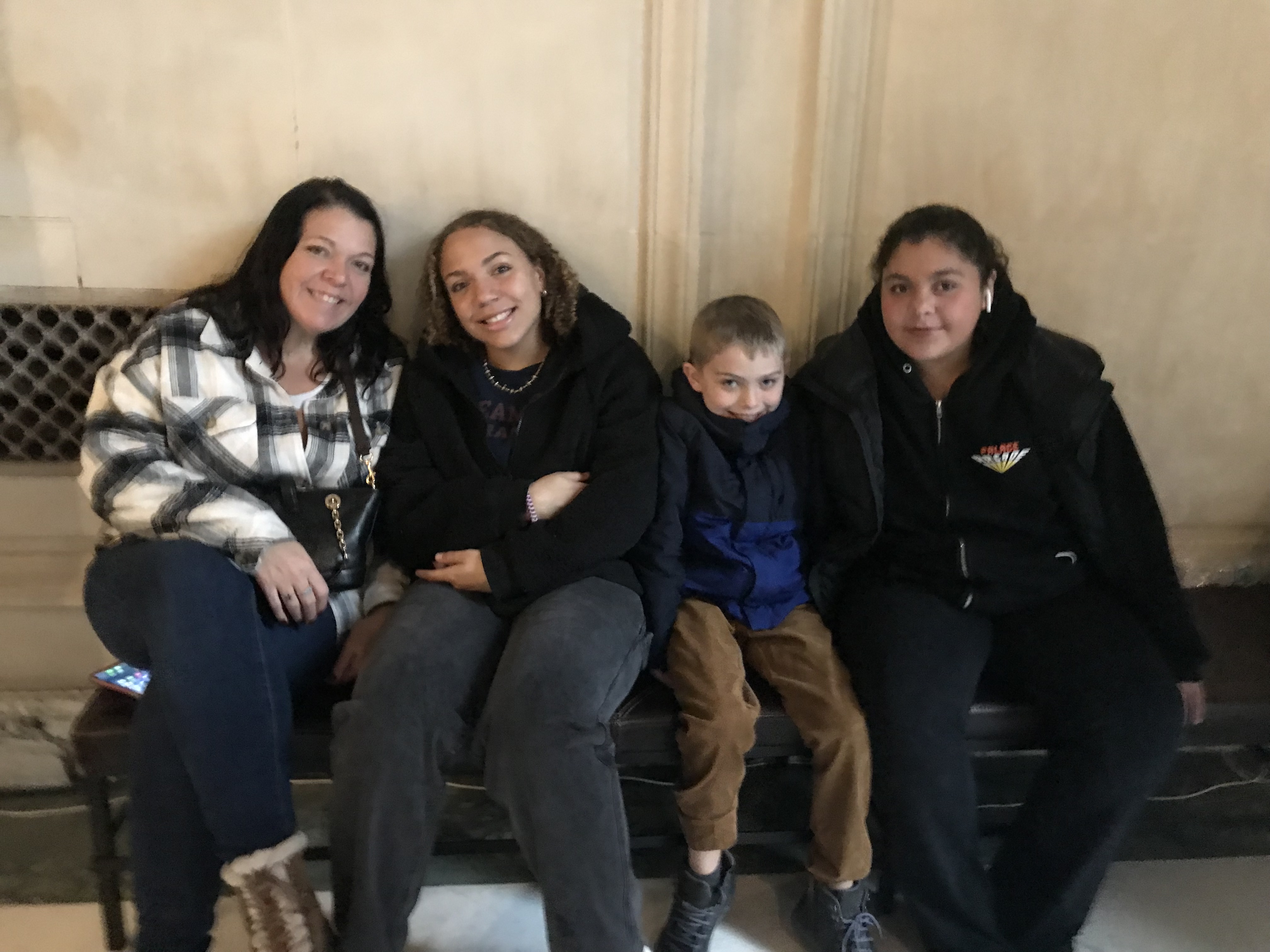
At the end of the trip, I felt like we had our own small fortune to brag about and that was our family. Lewie was awe struck by the mansions but said the best part of our one-night adventure was spending time with his cousins.  I couldn't agree more. The kiddos were so well behaved, and I had no idea, the youngest, Lilly, is a little historian in the making. I LOVED watching her marvel at old photos, documents, and all the rooms in the houses. (She literally beamed with excitement throughout the entire two-hour servant tour!)  "That's so cool," she repeated over and over again.  As I watched the expressions of the kids, each with their own cell phones or parents' cell phones taking pictures, I couldn't help but think in my head, "yea, this is pretty cool, indeed."